Old Photos of
OWOSSO, MICHIGAN
OWOSSO, MICHIGAN
Looking North on Washington St. from Comstock...about 1910
Looking North on Washington St. from Main.....about 1915 Owosso Fair sign.
1890's Baseball Team....Includes what look to be Rockland and Aurora uniforms... along with drummer boys. Some are holding a sign that says "OLD 487".
Main and Washington Streets....looking west about 1910
100 Block of West Main Street in about 1910
Main and Park Streets looking West...1940s.... Capitol Theatre
Looking north on Water St......Stereo View circa 1875
Fayette Square looking north circa 1916
George T. Semrau and his horse drawn Bread Wagon in March of 1914
Paving Michigan Ave. in 1906. Today, this is the only remaining brick paved street in the city. The lowest bid for paving Michigan Ave. went to Andrew Geeck at a cost of $8,700. The Detroit Vitrified Brick Company of Corunna furnished the materials.
Looking southwest at 106 N. Washington St. Card was mailed from Owosso in June of 1910. The business on the left is Davis Dry Goods Co. and the one on the right with the crowd in front is F. W. Pearce Hardware, Furniture and Undertaking on the corner of Washington and Main St.
"McCormick Day" celebration at Owosso circa 1900. People, horses, and farm machines gathered on Main St. This view is looking east. Several grain binders and a brass band are visible. "McCormick Days" were organized by McCormick dealers to celebrate the delivery of new machines to customers. Dealers used the events to promote the company and generate further sales.
Washington St. looking south from the corner of Washington and Exchange St. in 1953
The Street Car ...Looking east on Main St. in 1910
100 Block of East Main St. looking Northwest from Washington St. Notice streetcar overhead power lines.
Looking north on Water St......Stereo View circa 1875
Fayette Square looking north circa 1916
Owosso Sept. 20, 1955 Panoramic view Looking West from Saginaw and Main Streets
The Street Car... Looking east on Main St. in 1910
Main and Ball Streets looking East in about 1913
Bird's Eye View
Owosso Fire Dept. Ladder Truck
Owosso Police Chief Rex Smock in 1959
Owosso Police Dept. officers - 1900
Main and Washington Streets....looking west about 1910
100 Block of West Main Street in about 1910
Looking north on Water St......Stereo View circa 1875
Fayette Square looking north circa 1916
Washington St. looking south from the corner of Washington and Exchange St. in 1953
100 Block of East Main St. looking Northwest from Washington St.Notice streetcar overhead power lines.
Looking North on Washington St. from Comstock...about 1910
Looking North on Washington St. from Main.....about 1915
Owosso Fair sign.
1890's Baseball Team....Includes what look to be Rockland and Aurora uniforms... along with drummer boys. Some are holding a sign that says "OLD 487".
Estey Manufacturing - Owosso - Before the Fire
Estey Manufacturing - Owosso - After the Fire
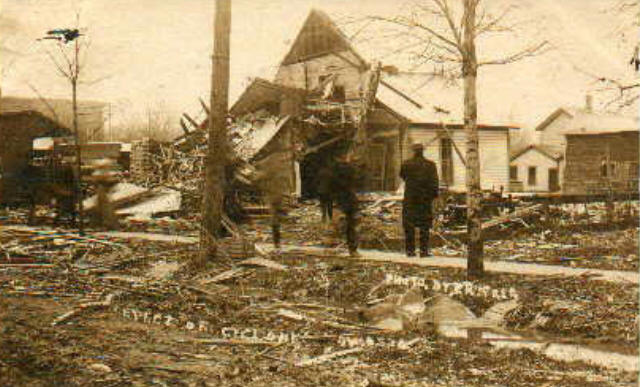
Tornado destroys the Estey Manufacturing Company - Nov. 11, 1911
The Estey building was called the White Elephant. Here it is after the 1911 tornado
Looking north on Water St......Stereo View circa 1875
Fayette Square looking north circa 1916
Owosso Sept. 20, 1955 Panoramic view Looking West from Saginaw and Main Streets
1910 Fountain in McCurdy Park - Corunna
Memorial Hospital - Owosso - 1930's
Carnegie Library - Owosso - 1950's
George Bush sitting in Owosso made Woodard Furniture
Jimmy Cagney in Owosso Parade - 1940's War Bond Drive
Carrie Nations doing her thing in Owosso
Woodard Casket Co. parade at plant in Owosso
Curwood Castle under construction
James Oliver Curwood standing in front of his newly constructed Castle
Fillian in about 1905 on the 100 block of North Washington St. - Owosso
Fillian on the Ball. Try standing on a ball and rolling it up an incline with no net.
1906 Ringling Bros. Circus Poster from Owosso
Circus Parade going south in the 100 block of N. Washington St. - Circa 1900 - Owosso
1898 Circus Parade - Elephant in front of the Congregational Church in Owosso
Owosso - Corunna Steam Train on Corunna Ave.
Central Michigan Railraod Depot - Circa 1900 - Westown Owosso
Another view of the Grand Trunk Depot at Owosso
Old Junction Hotel - Westown Owosso
Another view of the Junction House Hotel
Owosso Hotel Hauck in 1909
Southwest corner of Ball and Exchange St.
Conner Ice Cream Company building on far left
Exchange Hotel - Southwest corner of Ball and Exchange Streets - Owosso
Lobby area of the National Hotel - southwest corner of Main and Washington St. Owosso
Wildermuth Hotel - Now Indian Trails Headquarters -Downtown Owosso
Corey Laundry of Owosso after the 1911 Tornado
Weatherproof Body Co. - Corunna Plant
Woodard Factory after the 1911 Tornado
Owosso Manufacturing Co. - 1884 - Looking north from Main St. - Chipman St. on far left.
Owosso Manufacturing Co. made Screen Doors and Windows, Snow Shovels and "Humpty Dumpty" Egg Crates
Owosso Motor Truck Co. - 1910 - Which Method Do You Use?
1857 Map of Owosso - Looking Northwest
Owosso Bryant School cicra 1900
Field Body Corp. of Owosso built many cabs for the Ford Model T chassis
Owosso Casket Co. - Now part of the Woodard Station Complex - Far left building
Owosso Coach Co. built many travel trailers - this ad is from 1948
Looking West at Owosso from about Hickory St. - 1955
Owosso Masonic Temple - Built about 1928 - Northwest corner of Washington and Mason Streets
Walker Candy Co. building - 1929 - later Redmond Motors
Washington School - 1915 - Located near 715 S. Washington St. where the Wesleyan Church is today
Owosso High School - 1928 - presently used as the middle school
Salem Lutheran Church in Owosso after the 1911 Tornado
Michigan Central Depot under construction in Laingsburg
Nurses Home at Owosso - present site of the E.R. at Memorial Hospital
Old Picture of Owosso City Hall
E. Petit was the Tea Agent for Grand Union Tea Company
Last Update: 1-09-24......
This is a personal website owned by Steve Schmidt.
Copying any photos and information is prohibited.
Copyright 2024 © All rights reserved